

There's a moment we see again and again at JDBS. A student comes back to the office after their first month at a company, and before saying hello, they pull out their phone and show us the bank SMS. Their first stipend.
They're usually trying to look casual about it. They never quite manage.
That first payment changes how a young person thinks about work, about money and about themselves. So let's talk about how earning a stipend while studying actually works, without the hype, and what you should know before you count on it.
What a stipend actually is
A stipend is money paid to you during practical training. It isn't a salary in the full sense, because you're still learning. But it isn't pocket money either. You're doing real work at a real company, and the company pays you for it.
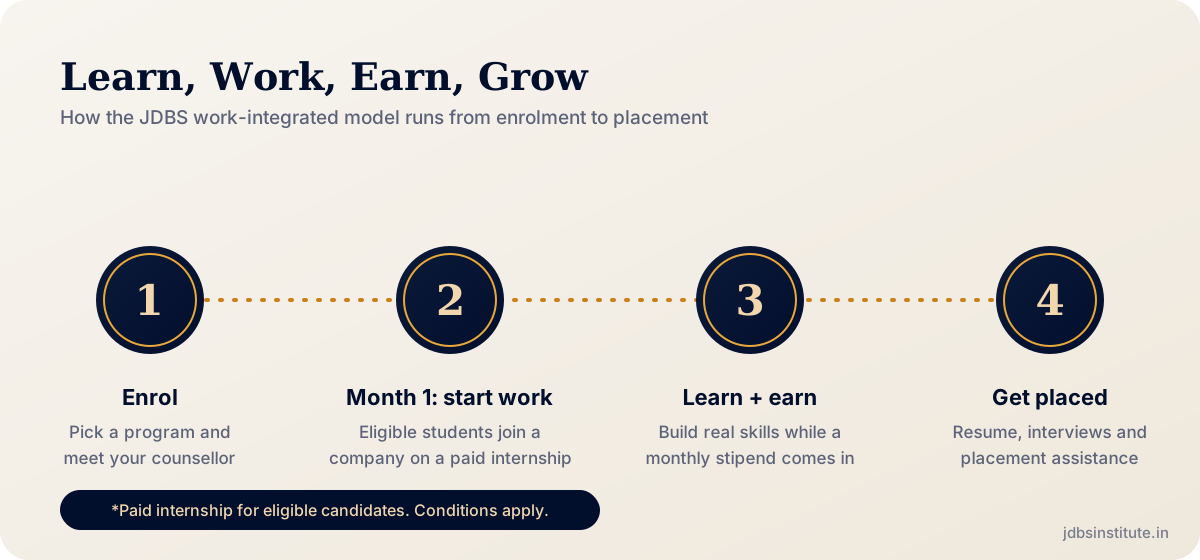
At JDBS this sits at the centre of what we call the work-integrated learning model. Instead of sitting in a classroom for a year and only then looking for work, eligible students are placed in companies for paid practical training from the very first month of their program.
So you learn, you work, you earn, and you grow. In that order, but all at once.
Who is eligible (and why that word matters)
You'll notice we keep saying "eligible candidates". That's not legal padding. It's genuinely how it works.
A company that takes on a trainee is trusting us to send someone reliable. So eligibility depends on things you control: turning up, behaving professionally, putting in effort during training, and following the institute's rules. A student who skips days or treats the workplace casually puts the whole arrangement at risk, for themselves and for the next student we send.
We'd rather be upfront about this than have anyone feel misled later. If you're serious, eligibility is very achievable. If you're not, no stipend scheme in Kanpur or anywhere else will fix that.
What affects how much you earn
People always want a number. We understand. But a single figure would be dishonest, because stipends genuinely vary. Here's what tends to make the difference.
The company matters. Larger manufacturing and corporate employers run things differently from smaller firms, and the type of business shapes what they offer trainees.
The role matters. A trainee in accounts, stores, sales support or HR administration does different work, and the pay reflects that.
You matter most. Trainees who learn fast, communicate clearly and become genuinely useful tend to be noticed. Performance during training can open doors to better roles, and, down the line, to a full-time offer.
When you visit us, ask the counsellor to walk you through what's realistic for your chosen program. We'd rather set fair expectations than impressive ones.
How a stipend can offset your fees
This is the part that surprises most families.
Because the earning starts early, many of our students recover a significant portion of their course cost through the stipend they receive during their paid internship. Some recover the entire cost. Suddenly the question "can we afford this course?" looks very different.
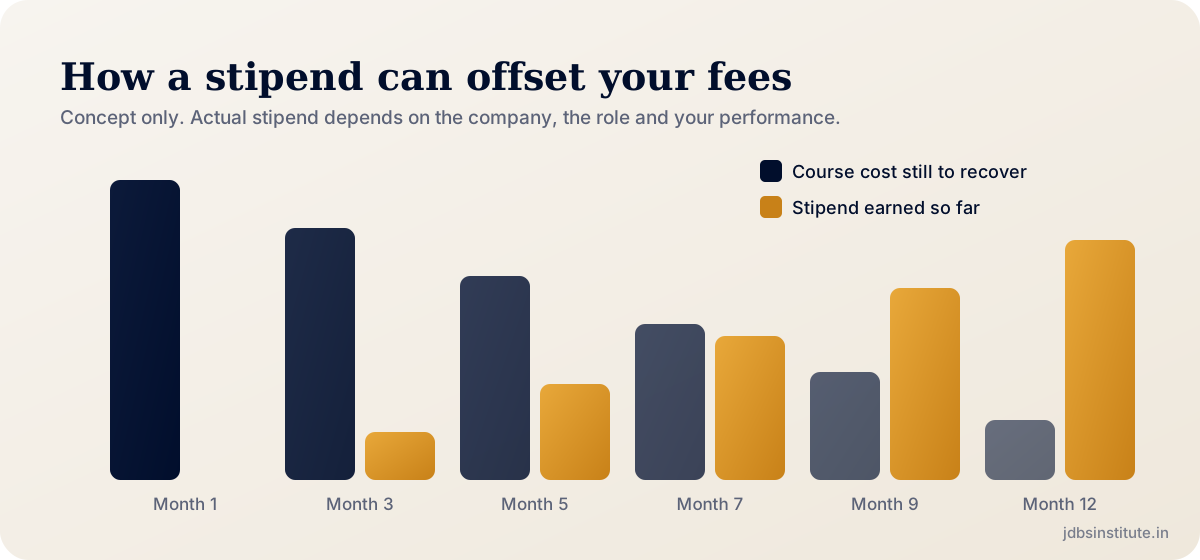
Picture a B.Com student from Kalyanpur whose parents are already stretched paying college fees. Adding a professional course feels impossible. But if that student starts paid practical training in month one, and stays consistent, the course gradually starts paying for itself. That's the whole idea behind "Learn While You Earn".
We'll be honest though. It depends on consistency, placement and performance. Treat it as a strong possibility you work towards, not a guarantee you sit back and wait for.
What to do with your first stipend
Right, the SMS has arrived. Now what?
First, celebrate a little. You've earned it. Buy the sweets, take your mother out, do whatever feels right.
Then be a bit sensible. Here's what we usually suggest to students.
- Put a fixed share aside before you spend anything, even if it's small. The habit matters more than the amount.
- Contribute something at home if you can. It changes how your family sees your course, and how you see yourself.
- Keep a simple record of what comes in and goes out. A notes app is enough.
- Spend some of it on yourself professionally, like a decent formal shirt or a basic course on Excel. That money comes back.
Avoid the trap of committing to EMIs on a new phone the moment you start earning. Stipends can change as you move through training, and you don't want a loan running on assumptions.
Why earning early changes more than your bank balance
Here's the thing nobody puts on a brochure. Earning while you study builds a kind of confidence you can't get from marks.
When you've handled real tasks, dealt with a manager, sat through a busy month-end and been paid for it, you walk into a job interview differently. You're not saying "I'm a quick learner". You're saying "Here's what I did at my training company".
It also takes pressure off at home. In a lot of Kanpur families the expectation is still a government job or a long degree, and anything else feels risky. A student who brings home a stipend in the first month is a pretty convincing argument. We've seen sceptical fathers turn into the program's biggest supporters after a couple of months.
If you're comparing options, our guide to paid internship courses in Kanpur covers what to check before you sign up anywhere, us included.
A quick reality check
A stipend is not easy money. You'll have early starts, travel across the city, tasks you find boring and supervisors who are busy and short with you sometimes. That's work. It's also exactly why employers value people who've done it.
If you go in expecting a real job with real responsibility, you'll do well. If you go in expecting a paid holiday, you'll struggle, and honestly, we'll tell you so.
Start earning sooner than you thought
You don't have to wait until graduation to start building a work history or contributing at home. With the right program and a bit of discipline, you can begin in month one.
If that sounds like you, read more about how JDBS works, then start your application. It takes about two minutes. Or call us on 7081107037 and ask the awkward money questions directly. We're used to them.