Your phone buzzes. "We'd like to invite you for an interview on Thursday at 11 am." For about four seconds you're thrilled. Then the panic arrives.
What do I wear? What will they ask? What if my English isn't good enough? What if I go blank?
Breathe. Almost everyone feels this before their first interview, and almost everyone gets through it. The difference between a nervous candidate who does well and one who doesn't is usually just preparation. So here's the checklist we walk our own students through at JDBS, in the order you'll need it.
The week before: research and paperwork
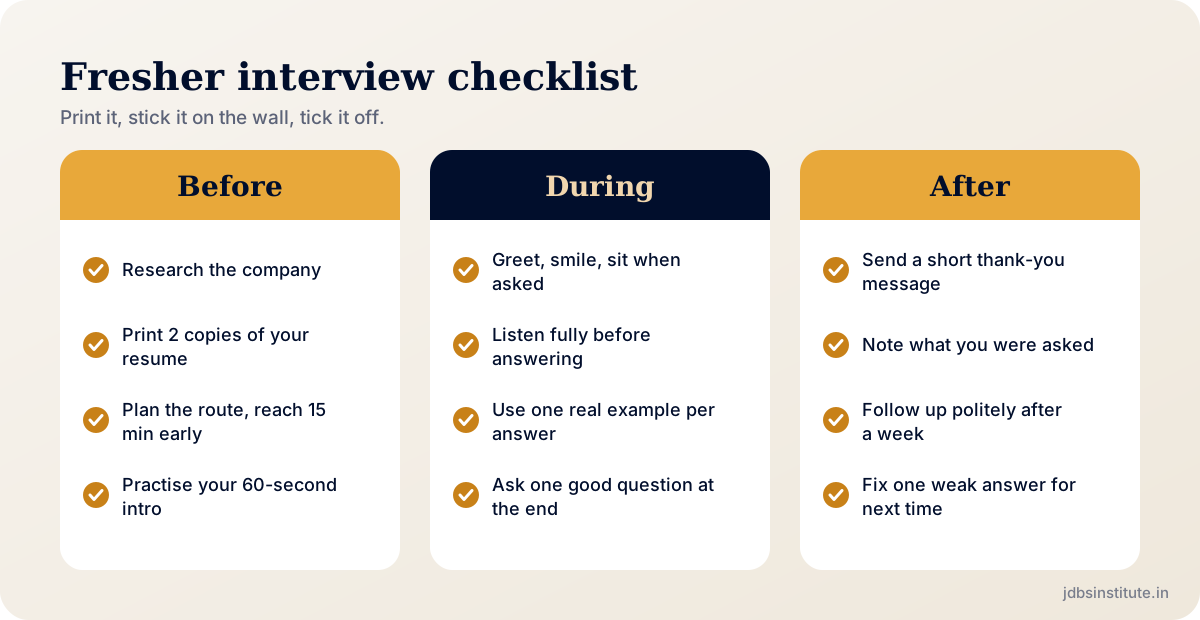
Start by finding out what the company actually does. Not the name. What it makes or sells, who its customers are, and roughly where it operates. Their website, a quick search, even asking someone who works there all count.
If it's an industrial company out in Panki or Dada Nagar, know what they manufacture. If it's a bank or insurance office, know what products they push. Interviewers love asking "What do you know about us?", and a blank face here costs more than people realise.
Next, read the job description twice. Underline the skills they mention. For each one, think of one example from your studies, training or life where you used something close to it.
Then sort your paperwork. Put these in a clean folder the night before you'd usually think of it:
- Three printed copies of your resume
- Mark sheets and certificates, originals plus photocopies
- A government ID and two passport-size photos
- Any training or internship letters
- A pen that actually works
If your resume needs work, don't wait. A tidy one-page resume is part of the impression you make before you've said a word.
Practise the questions you'll definitely get
Some questions come up in nearly every fresher interview. You'd be surprised how many people still get caught off guard by them.
"Tell me about yourself." Keep it to about a minute. Education, any practical training or projects, one or two skills, and why this role. That's it. No life story.
"Why do you want this job?" Connect it to something real, like the kind of work, the industry, or the chance to learn a specific skill. "I need a job" is honest, but it isn't an answer.
"What are your strengths and weaknesses?" Pick a genuine strength with an example. For weakness, pick something real but fixable, and say what you're doing about it.
"Where do you see yourself in five years?" They want to know you'll stick around and grow. Talk about growing in the field, not leaving for an MBA abroad next spring.
"Do you have any questions for us?" Always say yes. Ask about training, the team or what success looks like in the first three months.
Practise all of these out loud. In front of a mirror, a friend, or your younger cousin who'll laugh at you. Saying the words aloud is completely different from thinking them.
The night before and the morning of
Lay out your clothes. A clean, ironed formal shirt, dark trousers and polished shoes are right for most office and industrial roles in Kanpur. No suit needed. Keep it simple, neat and comfortable.
Check the route. Kanpur traffic doesn't care about your interview. If the office is across the city, plan to arrive twenty to thirty minutes early and sit nearby if you're too early. Arriving sweaty and late is a hard start to recover from.
Sleep properly. Revising until 2 am does more harm than good. Eat something light in the morning, and carry water.
In the room: small things that matter
You'll be judged in the first minute, fair or not. So get the small things right.
Greet whoever is at reception politely. Sometimes they're asked for an opinion. Switch your phone to silent, not vibrate. When you're called in, wait to be offered a seat, sit straight, and make comfortable eye contact.
Listen to the full question before answering. It's fine to pause for a second to think. If you don't understand something, ask them to repeat it. That's far better than answering the wrong question confidently.
If you don't know an answer, say so honestly and mention how you'd find out. "I haven't used SAP yet, but I've worked in Tally and I pick up software quickly" is a good answer. Bluffing is not.
On language, don't panic about English. For many roles here, Hindi is completely acceptable, especially if the interviewer uses it. Clear and confident matters more than fancy. If the role needs English, keep your sentences short and simple. You'll sound more confident, not less.
After the interview
Send a short thank-you message or email the same day. Two or three lines is enough: thanks for the time, you enjoyed learning about the role, and you look forward to hearing from them.
Then write down what they asked and how you answered. Be honest with yourself about what went well and what didn't. That note becomes gold for your next interview.
If they gave a date and it passes, one polite follow-up is perfectly fine. Daily calls are not.
And if you don't get it? It stings. But first interviews are practice whether you like it or not. Every one makes the next easier.
Why real work experience makes interviews easier
Here's something we've seen over and over. Students who've done practical training at a real company walk into interviews calmer. They have actual stories. "In my training, I handled the daily stock report" beats "I'm hardworking and a quick learner" every single time.
That's a big reason our programs combine paid practical training with interview preparation, grooming and resume building. If you'd like to understand what skills to build first, our post on the skills industrial companies want in freshers is a good next read, along with how work-integrated learning works.
You've got this, really
Interviews feel huge the first time. They get smaller with practice and preparation, and this checklist covers most of what you need.
If you'd like help with mock interviews and real workplace experience before the big one, have a look at JDBS or apply here. You can also hear from students who've been through it on our testimonials page. Good luck on Thursday.